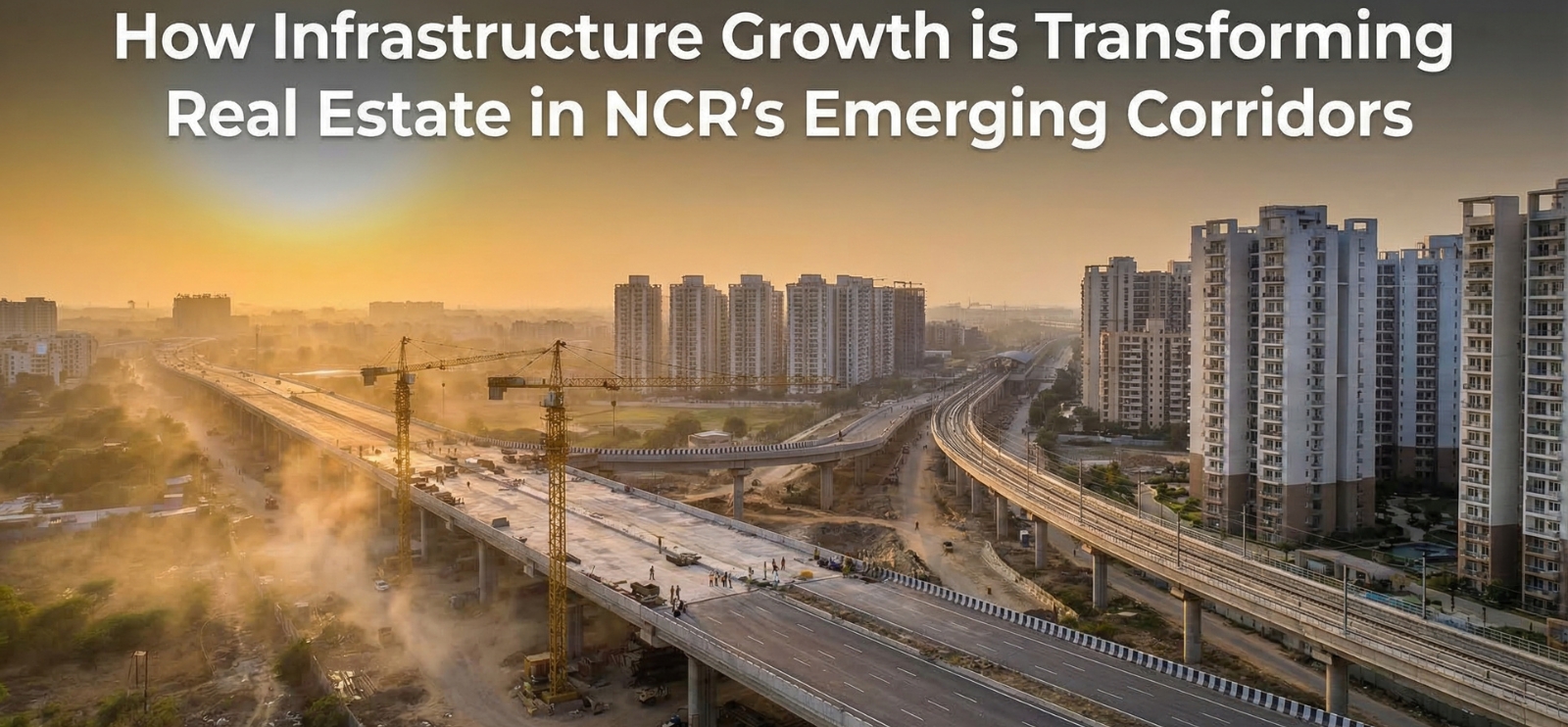
The real estate landscape of the National Capital Region (NCR) is undergoing a significant transformation, driven largely by rapid infrastructure development. What was once limited to core urban hubs is now expanding outward, bringing emerging corridors into the spotlight. Improved connectivity, planned urban expansion, and better accessibility are reshaping how homebuyers and investors evaluate locations.
The Infrastructure Push
Over the past decade, NCR has witnessed substantial investments in infrastructure, including expressways, highways, and regional connectivity projects. Developments such as the Kundli-Manesar-Palwal Expressway have played a crucial role in connecting peripheral regions with key economic centres. These projects have significantly reduced travel time and improved accessibility, making previously overlooked areas more viable for residential and commercial development.
As connectivity improves, the perception of distance changes. Locations that were once considered far are now seen as convenient alternatives to crowded metro centres.
Rise of Emerging Corridors
Cities like Sonipat, along with other NCR corridors, are witnessing increased real estate activity. The combination of strategic location and improving infrastructure is attracting both developers and buyers. These areas offer larger land parcels, better planning opportunities, and lower density compared to traditional urban hubs.
For developers, this means the ability to create more integrated and thoughtfully designed communities. For buyers, it translates into access to more spacious homes, open green areas, and a better quality of life.
Changing Buyer Preferences
Today’s homebuyers are not just looking for a house; they are looking for a lifestyle. The demand has shifted towards well-planned communities that offer a balance between connectivity and comfort. Infrastructure plays a key role in enabling this shift.
With better roads and connectivity, buyers are more willing to move slightly away from city centres in exchange for improved living conditions. Features such as wider roads, green spaces, and lower congestion are becoming increasingly important decision-making factors.
Investment Potential
Infrastructure development is also a major driver of property appreciation. As connectivity improves and social infrastructure follows, property values in emerging corridors tend to rise steadily over time. This makes these areas attractive for both end-users and investors looking for long-term returns.
Compared to saturated metro markets, emerging corridors offer relatively affordable entry points, making them ideal for first-time investors as well as seasoned buyers looking to diversify their portfolios.
The Role of Planned Developments
Developers are increasingly focusing on creating planned communities that align with evolving buyer expectations. Companies like OnePrastha are approaching these markets with a vision of integrated living, where infrastructure, amenities, and community spaces come together to create a holistic environment.
This shift from standalone projects to community-centric developments is redefining how real estate is delivered in emerging regions.
Looking Ahead
The growth of NCR’s emerging corridors is not a short-term trend but a long-term structural shift. As infrastructure continues to improve, these regions are expected to play a larger role in the overall real estate ecosystem.
For homebuyers, this means more choices and better living environments. For investors, it presents an opportunity to be part of a growth story at an early stage. And for developers, it opens up new avenues to innovate and create value-driven communities.
In conclusion, infrastructure is not just supporting real estate growth it is actively shaping it. As NCR continues to expand, emerging corridors are set to become the next big destinations for residential and investment opportunities.